
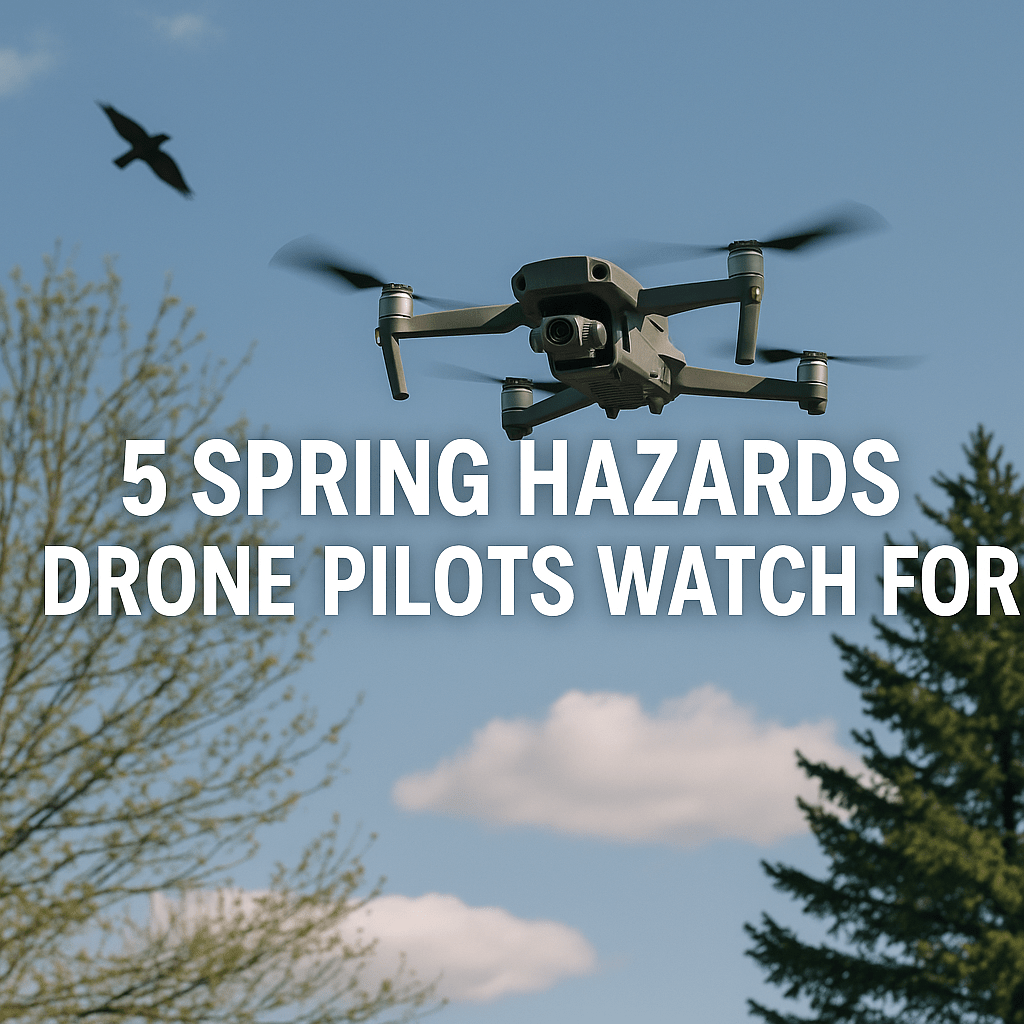
Flight Safety | Seasonal Hazards | Pilot Awareness
Posted: 2025/05/05
As the snow melts and fields turn green, drone pilots across Canada are eager to get back in the air. Spring offers some of the best flying conditions for UAV operators—longer daylight, beautiful landscapes, and a fresh sense of freedom.
But along with blooming flowers and nesting birds comes a fresh set of seasonal hazards that every drone pilot should know about. Whether you’re flying recreationally or under a Part IX SFOC, these five spring-specific risks can affect your flight performance, equipment, and safety.
Let’s break them down:
🐦 1. Bird Strikes & Nesting Season
Spring = territorial birds. Protect your drone from aerial ambush.
Spring marks the beginning of nesting season, and many birds—especially raptors—become territorial and aggressivetoward flying objects. That includes your drone.
What to watch for:
- Hawks, falcons, gulls, and even crows have been known to attack drones.
- Cliff sides, trees, rooftops, and coastal areas are hot zones.
- Dive attacks often happen silently and from above.
Pilot tip:
If you see a bird flying toward your UAV—descend immediately and land. Consider it their airspace, especially near known nesting zones. Also, Transport Canada protects many bird species; harassing wildlife, even unintentionally, could lead to enforcement action.
🌳 2. Tree Canopy Changes
The forest has changed. So should your pre-flight habits.
Trees you’ve flown around all winter are suddenly full of leaves, new growth, and hidden branches. These natural obstacles can disrupt line of sight, affect GPS signal, and cause crashes.
Hazards include:
- Unseen branches in thick foliage
- Pollen buildup on sensors
- Changes in familiar landscapes
Pilot tip:
Re-check your regular flying locations. What was once a clear line of sight might now be a no-go zone. Fly slightly higher and use obstacle avoidance systems—but don’t rely on them alone.
💨 3. Gusty Spring Winds
The invisible hazard that drains batteries and blows flights off course.
Spring brings wind variability, especially in open fields, valleys, and coastal areas. Even if the weather is calm at ground level, sudden gusts at altitude can lead to flight instability.
What to watch for:
- Turbulence near hills and buildings
- Strong crosswinds at higher altitudes
- Increased battery drain from wind resistance
Pilot tip:
Use tools like NAV Drone, UAV Forecast, or Windy before flight. If gusts are forecast over 20 km/h, consider rescheduling or adjusting your flight altitude.
🌼 4. Pollen, Moisture & Sensor Glitches
Spring is beautiful—but it’s messy for your drone.
Between moisture in the air and high pollen levels, your drone’s sensors, lenses, and ventilation systems are under stress.
Potential issues:
- Camera haze from airborne pollen
- Moisture fogging internal components
- Sticky motors or gimbal response issues
Pilot tip:
Clean your drone after every flight with a microfiber cloth and compressed air. Store in a sealed, dry case with silica packs to prevent internal humidity buildup.
🚶♂️ 5. Crowds, Parks & Shared Airspace
It’s not just about the sky—it’s about who’s underneath it.
Warmer weather means more people outdoors—and that increases your risk of overflight violations, privacy complaints, and airspace conflicts.
What to consider:
- Public parks are now crowded with hikers, cyclists, and kids
- Other drones and kites may be airborne too
- Compliance with Part IX of the CARs means no flying over bystanders without a compliant drone and proper procedures
Pilot tip:
Always use NAV Drone or RPAS Flight Authorization tools before flying. Wear high-vis vests when operating in shared spaces, and maintain visual line of sight at all times.
✅ In Summary:
Spring is one of the most rewarding seasons for RPAS operations—but only if pilots adapt their practices for seasonal hazards. Whether you’re capturing fresh green landscapes or performing inspections, remember:
- Check the weather (wind, moisture, pollen)
- Know your location (airspace & wildlife)
- Respect the public (privacy & safety)
🎙️ Sky Commander Academy Podcast
Whether you’re brushing up on seasonal safety or working toward your RPAS certification, there’s always more to explore.
🎧 Check out the Sky Commander Academy Podcast — a go-to training resource for drone pilots covering real-world scenarios, Transport Canada regulations, air law, and operational tips for every level of flyer.
Subscribe wherever you get your podcasts:
Spotify | Apple Podcasts | Google Podcasts
 Sky Commander – Drone Inspections & Aerial Intelligence
Leave a comment