
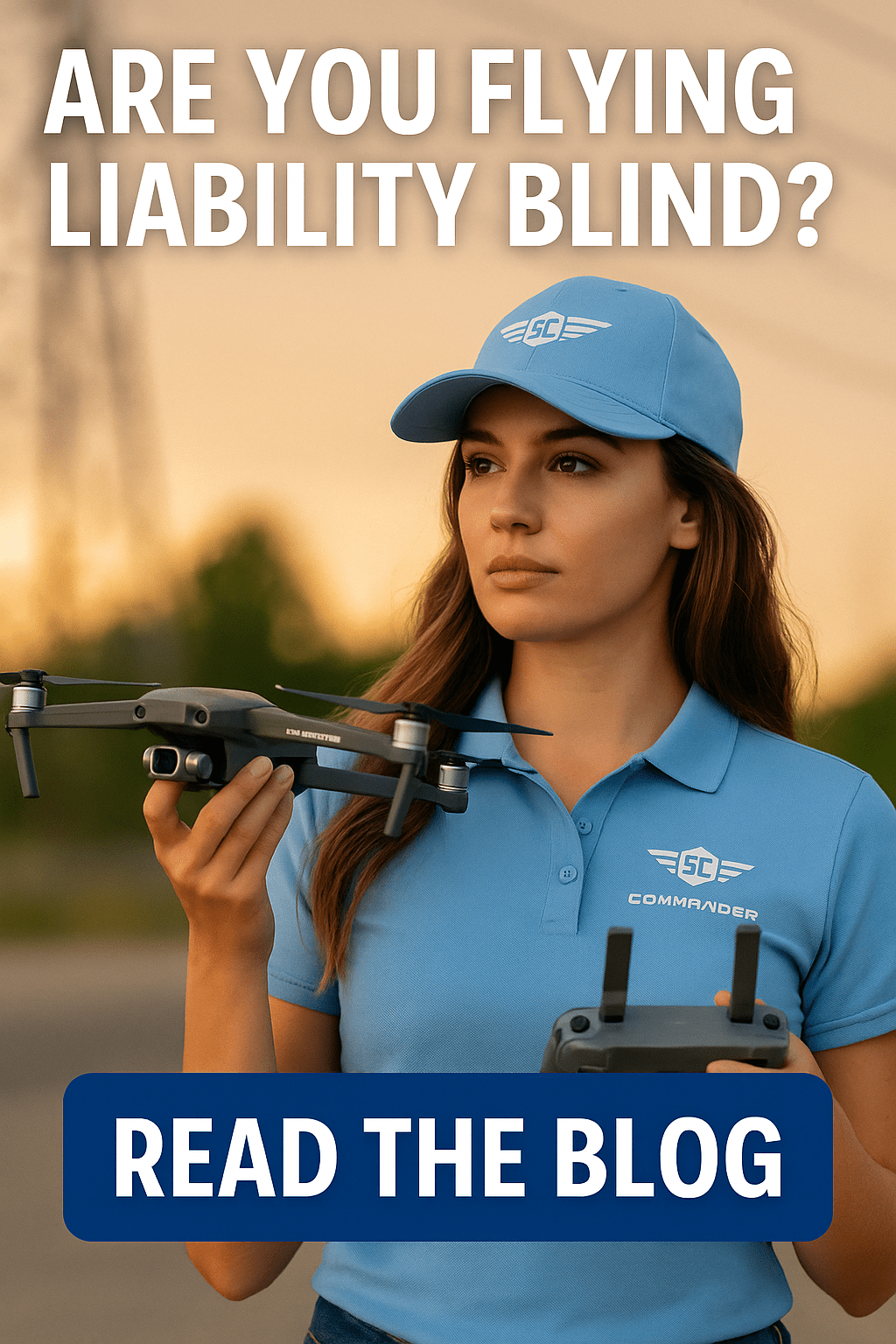
“The pilot is in charge — but also charged if things go wrong.”
Welcome to the invisible battlefield every drone pilot navigates. From the skies above suburban streets to the corridors of Canada’s power grid, your drone might be the star — but you’re the one on the hook if something fails. Whether you’re an aspiring RPAS pro or managing a fleet, liability isn’t optional — it’s omnipresent.
🎙️ Listen While You Learn
🎧 S2E10 – Crash, Fine, Lawsuit: What Every Advanced Drone Pilot Needs to Know About Liability
Season 2, Episode 10 of the Sky Commander Academy podcast delves deep into the rules, risks, and realities of RPAS liability in Canada.
➡️ Click here to listen — then continue reading to build your shield.
🧠 What’s at Stake: Real Risks, Real Consequences
Drones are incredible tools — but every takeoff carries weight:
- ✖️ A near-miss with a powerline = a lawsuit.
- ✖️ A crowd flyover = a Transport Canada violation.
- ✖️ A missed log or firmware update = you’re now the “negligent operator.”
There’s no such thing as a minor incident when you’re flying commercially.
In most cases, you can’t blame the drone. You’re the Pilot-in-Command — and in the eyes of the law, that makes you the liable party.
🛡️ Build Your Liability Shield: What Every Smart Pilot Does Before Takeoff
✅ 1. Plan Like a Pro
- Open the NAV Drone App and verify airspace. Screenshot it. Save it.
- Check for NOTAMs, TFRs, and local hazards.
- Survey the scene. What’s the real risk if your drone drops?
✅ 2. Inspect Your Aircraft
- Visuals: Look for prop cracks, airframe stress, loose components.
- Batteries: Check charge, voltage, temperature, and wear.
- Firmware: Don’t fly without the latest updates.
- Logs: Maintenance and pre-flight inspections must be recorded.
✅ 3. Validate Your Documentation
- Is your RPAS registered?
- Is your Advanced Certificate up to date?
- Do you have your site survey, SOPs, and emergency plan on file?
🚨 Pro Tip: If it isn’t documented, it didn’t happen.
📉 The Cold Reality: What Transport Canada Incident Reports Reveal
Each month, new drone incident reports are quietly uploaded to Transport Canada. Buried in those spreadsheets are:
- Drones crashing due to EMI near substations.
- Operators flying in controlled airspace without clearance.
- Batteries failing in cold weather… or mid-mission.
These aren’t rare. They’re recurring.
👉 Read them. Learn from them. Or risk becoming the next statistic.
📜 Quick History: How RPAS Liability Laws Evolved (And Got Stricter)
- 2019: Major overhaul — pilot certification and drone registration become law.
- 2021+: Rise of Advanced Ops = rise in Transport Canada enforcement.
- 2023–2025: Push for digital logs, site surveys, and SOP compliance.
The direction is clear: More rules. More accountability. Less tolerance for “Oops.”
📦 Client Takeaway: “Maybe I Should Leave This to the Pros”
If you’re a business owner, real estate pro, or utility operator reading this — and your pilot isn’t discussing these risks?
🚩 That’s a red flag. Because this stuff isn’t optional.
At Sky Commander, every pilot is:
- Certified to the Advanced RPAS level
- Trained on liability mitigation and emergency response
- Operating with insurance, documentation, and SOPs in place
Fly smart — or don’t fly at all. That’s our motto.
💥 Hooked? Here’s What to Do Next:
✅ Want to learn more?
🎧 Listen to Sky Commander Academy on Spotify. Season 2, Episode 10 is the one you can’t afford to miss.
📬 Want insider tips, tools, and exclusive content?
Sign up for our newsletter — and we’ll send you the Sky Commander Pre-Flight Shield™ checklist free.
 Sky Commander – Drone Inspections & Aerial Intelligence
Leave a comment