
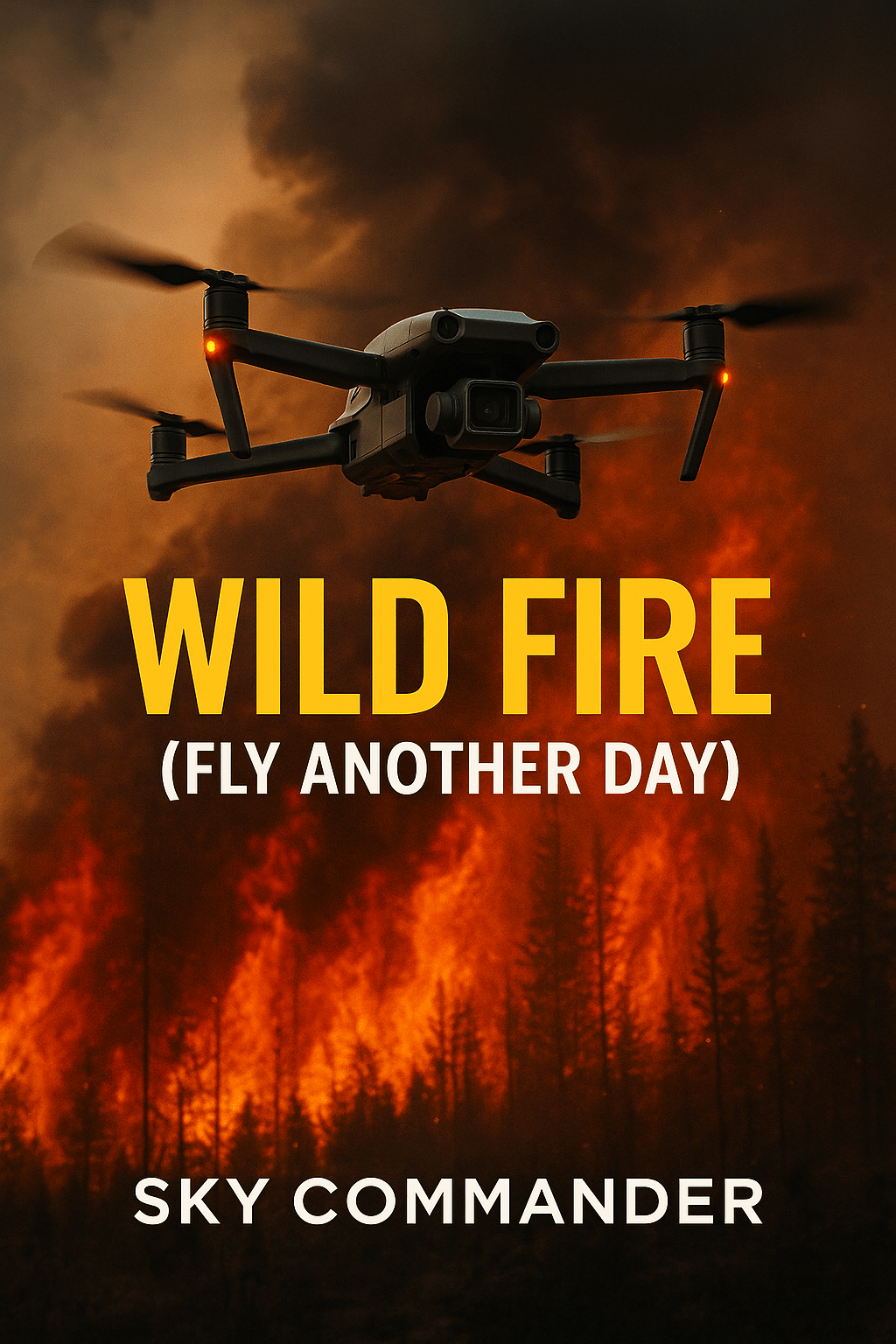
By Sky Commander | Aerial Intelligence | Canada
It’s hot, fast, and unforgiving.
Wildfire airspace isn’t just dangerous — it’s elite-tier territory. And when the flames rise in Alberta or anywhere across Canada, one thing is certain:
You don’t just need a drone. You need a commander in the sky.
At Sky Commander, we train, plan, and prepare like wildfire missions are tomorrow — because one day, they will be. And when that moment comes, it’s not time to wing it. It’s time to execute with precision, discipline, and respect for one of the most complex airborne environments on Earth.
🚫 Let’s Be Clear: Wildfires Are Not a Place to Learn
Flying near an active wildfire isn’t an adventure — it’s a high-risk, high-stakes operation that demands the absolute best in aerial coordination, risk mitigation, and regulatory compliance.
- The smoke will blind your drone.
- The heat will melt your gear.
- The turbulence will test your control.
- The wrong move could ground aircraft, jeopardize lives, or get you charged under federal law.
And that’s on a good day.
This isn’t “just another mission.”
This is flying inside a live, chaotic force of nature — where the air has teeth and the sky has rules.
🛑 What Makes Wildfire Ops So Dangerous?
Even if you hold an Advanced RPAS Certificate, you’re not automatically cleared or qualified to fly near wildfires. Here’s why:
- Smoke kills visibility fast. If you lose sight of your drone, you’re done.
- Thermal turbulence throws drones off course — sometimes into trees, sometimes into flames.
- Ash and soot coat sensors, lenses, and rotors, degrading performance mid-flight.
- Heat warps propellers, cooks batteries, and overloads circuits.
- Shifting winds can change your safe corridor into a crash zone in seconds.
- You could interfere with firefighting aircraft — and be responsible for grounding the entire operation.
Still feeling confident?
🧠 Leave It to the Pros. The Right Pros.
We get it. Drones feel like they can go anywhere — but they shouldn’t.
This is where training meets respect, where compliance meets competence, and where Sky Commander separates from the pack.
Our mission teams are built for precision under pressure. Our planning tools anticipate chaos. And our internal SOPs reflect a deep understanding of what’s at stake when infrastructure, people, and landscapes are in harm’s way.
We don’t take shortcuts.
We don’t take risks lightly.
And we don’t send hobby drones into hellfire.
When it’s time to fly the fireline, you don’t want a freelancer — you want a flight commander.
🔍 For Those Watching the Skies — Here’s What You Need to Know
If you’re curious about what wildfire drone ops involve, here’s a reality check:
- You need written airspace permission, not just an Advanced Certificate.
- You must coordinate with Alberta Wildfire, NAV CANADA, and the Incident Command System.
- You’ll need thermal cameras, IR overlays, and sensors that work through smoke.
- You must build escape routes — before you ever launch.
- You’ll need to pass weather, airspace, and mission briefs — just like manned aircraft.
And if you think this sounds like a lot, it’s because it is.
Because it should be.
⚠️ Sky Commander’s Warning to Drone Operators:
“If you’re flying toward the fire without a plan, the fire has already won.”
We aren’t here to scare you — we’re here to protect you, protect others, and protect the skies.
Wildfire drone ops are a privilege, not a playground. If you’re not certified, connected, trained, and equipped, don’t go near it. You could get someone killed. You could stop a water bomber from flying. You could crash — and your drone won’t be the only thing going down.
🔥 When the Smoke Clears, We’ll Be Ready
Sky Commander is built to operate where others pause.
Our crews are learning from the best, training for the worst, and building tools and procedures that will be ready when Alberta calls.
We’re not flying the fireline yet — but when we do, we’ll do it with the discipline of elite pilots, the precision of engineers, and the heart of a team that knows what’s at stake.
Because when things heat up — we don’t flinch.
🚁 Follow Sky Commander for Updates
For more on wildfire flight readiness, emergency RPAS deployment, and aerial intelligence missions that make a difference, follow us at skycommander.ca or on LinkedIn.
<figure id="<a-href="https://your-song-link.com"-class="sky-anthem-link"-target="_blank"-rel="noopener-noreferrer">—🎧-Listen-to-“Wild-Fire-(Fly-Another-Day)”-by-Sky-Commander-Sound-Lab-
Command the skies. Respect the fire.
Sky Commander™
 Sky Commander – Drone Inspections & Aerial Intelligence
Leave a comment