
Sky Commander Academy | Flight Briefs Blog
📅 Posted August 6, 2025
🔋 Fly Longer, Fly Safer — How to Maximize the Life of Your Drone Batteries
Ask any drone pilot what keeps their bird in the air, and you’ll hear a one-word answer: batteries.
But here’s the truth few talk about—most lithium-ion batteries start dying the day you buy them, and how you treat them makes the difference between safe skies and forced landings.
In this week’s Wingman Wednesday, we’re diving deep into the most overlooked factor in flight performance: battery health. Whether you’re running recreational missions or flying commercial jobs with critical data, these tips will help you fly safer, longer, and smarter.
⚠️ Why Battery Management Is Critical
Your battery is the heartbeat of your RPAS.
But unlike your drone’s frame or props, a battery can look brand new while silently failing from within.
- A single unbalanced cell can cause sudden voltage drops
- Poor storage can reduce lifespan by up to 50%
- Charging errors can spark fires, especially with larger packs
In short? A weak battery = a risky mission.
That’s why proper care isn’t optional—it’s essential.
🧠 Pro Tips for Battery Charging
Here’s how the pros charge their packs—and avoid rookie mistakes:
✅ Use the right charger. Stick with your drone’s official charger or a trusted third-party with voltage protection.
✅ Charge in a fire-safe area. Keep batteries on non-flammable surfaces like concrete or a LiPo bag.
✅ Skip the “quick charge.” Fast charging builds heat. Slow charging = less stress, better balance.
✅ Avoid charging to 100%. Charging to just 90–95% can extend battery life without major flight time loss.
✅ Don’t walk away. Always monitor charging. Fires can happen fast.
🌡️ Storage & Temperature Tips
Think of batteries like chocolate: they hate heat and cold.
🧊 Too cold? Internal resistance rises and voltage drops mid-flight.
🔥 Too hot? Cells swell, degrade faster, and become a fire risk.
Store batteries at ~40–50% charge if you’re not flying for a few days. That’s the “happy place” for lithium-ion longevity.
Don’t leave them in your car. A parked vehicle in the sun can cook your battery in under 30 minutes.
📊 Monitoring Battery Health
Pilots who track battery performance fly with confidence.
🔍 Check telemetry or app data. Watch for:
- Cell voltage imbalance (>0.15 V between cells is a red flag)
- Total voltage drop under load
- Declining capacity over time
🛠️ Log your flights. Keep notes on battery health and performance trends. If you see increasing voltage sag or erratic readings—it’s time to retire that pack.
🚨 When to Retire a Battery
Not sure if a battery is still good to go? Watch for these signs:
- One cell consistently reads lower than others
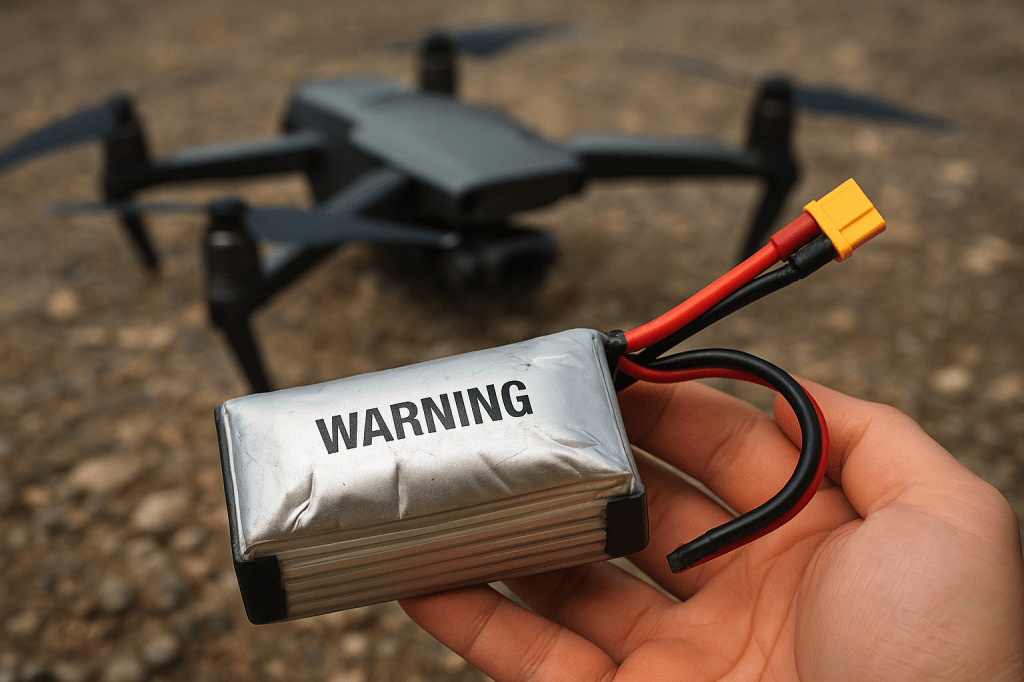
- Battery is puffy, leaking, or has a sticky surface
- You notice flight times shrinking fast
- Battery gets hotter than normal during charge or flight
- Your gut says: “Hmm, this doesn’t feel right”
🚫 Don’t take chances. One battery is cheaper than one crash.
♻️ Battery Disposal Tips
Once a pack is done, treat it with respect:
- Discharge fully before disposal (some chargers or resistive loads can help)
- Recycle through a battery-specific disposal program. In Canada, sites like Call2Recycle will help.
- Never toss a drone battery in regular garbage. That’s a serious fire hazard.
🎯 Final Flight Brief
A well-maintained battery can mean the difference between smooth landings and disaster recovery.
Remember:
- Charge smarter
- Store cooler
- Monitor closely
- Retire responsibly
Whether you’re a weekend warrior or a pro pilot on a tight schedule, battery care is mission-critical. Take the time to respect your pack—and it’ll return the favour.
📣 Join the Hangar Talk
What’s your hardest battery lesson learned?
Did you ever lose a flight—or almost lose one—because of a battery issue?
💬 Drop your story in the comments or DM us—we’ll feature the best ones in a future post.
Stay charged, stay sharp.
– Sky Commander Academy
 Sky Commander – Drone Inspections & Aerial Intelligence
Leave a comment