
✈️ Welcome back to Wingman Wednesday!
This week we’re diving into something big that’s about to reshape the skies in Canada: the brand-new Level 1 Complex Certificate for drone pilots. These changes take effect on November 4, 2025 and represent one of the most important shifts we’ve seen in Canadian drone regulations since the launch of the Basic and Advanced certificates.
Whether you’re a brand-new pilot just starting out, an advanced operator already flying missions, or someone curious about what’s next, this update matters. Let’s break it down — simply, clearly, and in a way that works for all skill levels.
What’s Changing?
Until now, Canadian drone pilots have operated under two main categories:
- Basic Certificate – For operations in uncontrolled airspace, away from people and airports.
- Advanced Certificate – For operations in controlled airspace, near people, and with larger drones (always with restrictions).
Starting November 4, 2025, a third certificate is being added: the Level 1 Complex Certificate.
This new certificate is designed to bridge the gap between advanced operations and full commercial authorizations. Here’s what you’ll need to earn it:
- Pass the Advanced Operations exam (if you haven’t already).
- Complete 20 hours of ground school at an accredited flight school.
- Pass the Level 1 Complex online exam.
- Pass a flight review specific to Level 1 Complex operations.
- Apply for your Level 1 Complex Certificate.
Key Acronyms You’ll Hear
- SFOC (Special Flight Operations Certificate): Until now, this was the permission slip for flying beyond the usual rules (e.g., Beyond Visual Line of Sight). The new Level 1 Complex certificate means many low-risk flights will no longer require an SFOC.
- BVLOS (Beyond Visual Line of Sight): Flights where the drone goes farther than you can physically see it. With Level 1 Complex, some lower-risk BVLOS flights will be allowed without an SFOC.
- RPOC (RPAS Operator Certificate): An authorization required for companies or individuals to run complex operations at scale. Pilots with the Level 1 Complex certificate must operate under an RPOC.
- RPAS (Remotely Piloted Aircraft System): The official Transport Canada term for “drone.”
Why Does This Matter for Pilots?
If you’re new to drones:
Think of this as your next mountain to climb. Once you’ve got your Basic or Advanced certificate, the Level 1 Complex certificate is the gateway to bigger missions — like BVLOS operations or flying larger drones — without all the paperwork of an SFOC.
If you’re an experienced pilot:
This certificate removes friction. No more endless SFOC applications for routine missions. You’ll gain access to operations that were once locked behind red tape, giving you more flexibility and potential income opportunities.
If you’re worried about automation taking over:
You’re not wrong — this shift does move more trust into the drone’s onboard systems, sensors, and AI. As BVLOS and autonomy expand, pilots will spend less time “hands on sticks” and more time managing the system. That doesn’t mean pilots are less important — it means your role evolves into mission manager, safety officer, and tech expert.
The Upside (Opportunities)
- BVLOS without SFOC: More freedom to fly farther with less paperwork.
- Medium-sized drone access: Expand into heavier equipment, opening new commercial doors.
- Standardized training: With required ground school and flight reviews, all pilots will level up their skills.
The Challenges (What to Prepare For)
- Time & Cost: Training and testing aren’t free. Expect to invest both money and time.
- Documentation: To operate complex missions, you’ll need to work under an RPOC.
- Responsibility: Flying farther, heavier, and more autonomously means bigger risks if you’re not prepared.
Wingman Tips for Success
- Start training early. Don’t wait until November — flight schools are already preparing.
- Brush up on Advanced Ops. Make sure your foundation is solid before stepping up.
- Think like a safety officer. The role of the pilot is shifting from “stick and rudder” to risk manager.
- Stay connected. Join pilot communities, listen to podcasts (like ours), and keep current with Transport Canada updates.
Want to Go Deeper?
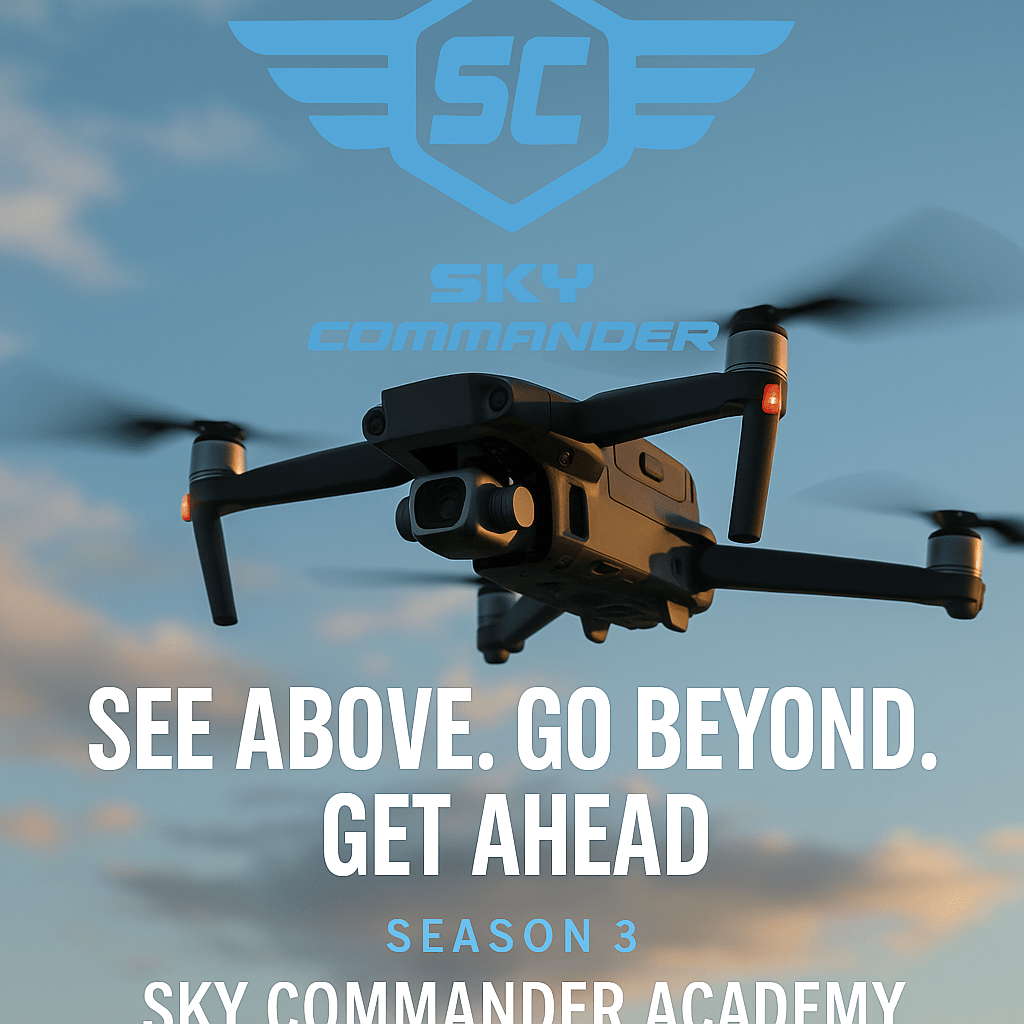
🎙️ Season 3 of the Sky Commander Academy Podcast is here — and it’s all about the new Level 1 Complex Certificate. The first three episodes are now live, covering everything from regulatory changes to real-world flight preparation.
We’ll walk you through the details, share real-world scenarios, and get you ready to ace both the knowledge test and the practical side.
Final Approach
The future of drone flying in Canada is getting more complex — literally. The Level 1 Complex Certificate is both a challenge and an opportunity. It raises the bar for training and safety, but also clears the path for more advanced, more exciting, and more profitable missions.
As your Wingman, my advice is simple: Don’t wait. Prepare now. The pilots who lean into these changes early will be the ones leading the way when November arrives.
✈️ Until next Wingman Wednesday… fly it smart — or don’t fly at all.
Sky Commander
See Above. Go Beyond. Get Ahead.
 Sky Commander – Drone Inspections & Aerial Intelligence
Leave a comment