
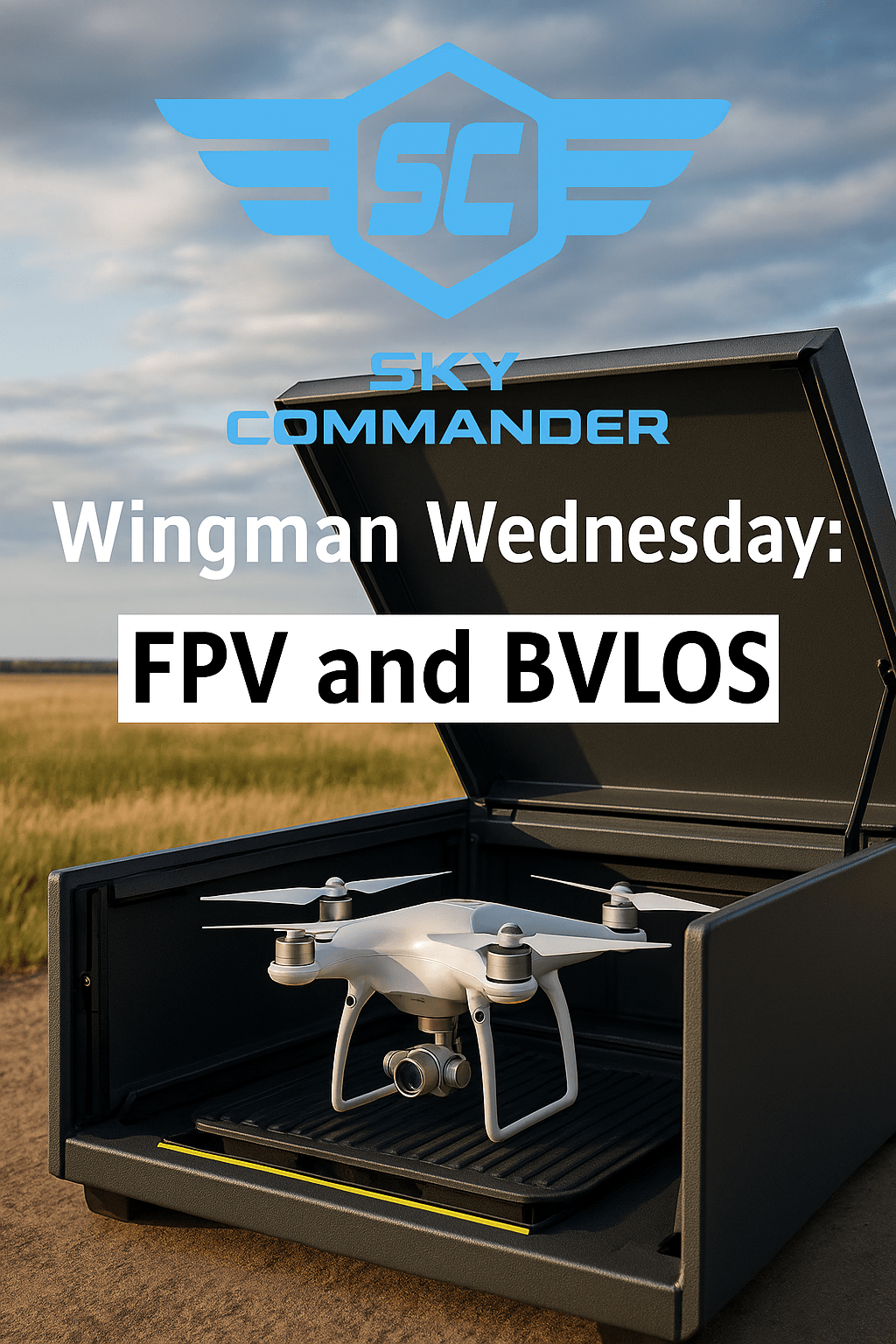
Last week we unpacked the basics of Drone in a Box (DIB) — automated docking stations that recharge drones, enable remote deployments, and keep fleets mission-ready. But the story doesn’t stop there. The next generation of Drone in a Box systems is already here, bringing with it smarter autonomy, tougher build quality, and game-changing payload integration. This week, we’re diving into the future of DIB — and what every pilot, operator, and organization needs to know to stay ahead of the curve.
🔋 Beyond Charging: The Box Gets Smarter
The first generation of DIB systems solved a simple problem: drones need power. Automated landing and charging stations made it possible to keep drones in the air without a human plugging in batteries.
But DIB 2.0 goes far beyond that.
- Battery swapping: Instead of waiting 30–60 minutes for recharging, new systems can automatically eject a drained battery and slide in a fully charged one. Downtime drops to just a few minutes.
- Weatherproof enclosures: Ruggedized housings allow drones to operate in heat, cold, wind, and rain. Some units can survive heavy snow or sandstorms without damage.
- Self-cleaning pads: Dust, ice, and debris can interfere with landings. Next-gen DIB stations integrate heating grids, vibration systems, or compressed-air blowers to keep landing zones clear.
Pilot takeaway: The new “box” is more than a garage — it’s a smart maintenance hub that makes 24/7, all-weather drone operations viable.
🧠 Brains Inside the Box: Edge Computing & AI
In older setups, the drone did the flying, the ground station did the processing, and the operator stitched it all together. That workflow is changing.
Modern DIB systems are equipped with edge computing hardware and AI processors that:
- Process data on the spot: Instead of uploading 200 GB of raw LiDAR data to the cloud, the station can pre-process, filter noise, and upload only usable datasets.
- Enable real-time analytics: AI can run vegetation encroachment checks, anomaly detection on powerlines, or identify human/vehicle activity in security patrols.
- Reduce latency: Faster local decisions mean critical alerts (like “hotspot detected on transformer”) can be flagged instantly, not hours later.
Pilot takeaway: Operators will need to shift from being “data gatherers” to data interpreters. Knowing how to configure AI filters, validate automated results, and cross-check anomalies will become a core skill.
🌐 BVLOS & Remote Operations: Unlocking the Real Potential
One of the biggest barriers for drone operations has always been line-of-sight restrictions. DIB 2.0 systems are built for a world where Beyond Visual Line of Sight (BVLOS) becomes the norm.
- Persistent deployment: A drone can launch from a station 300 km away, fly a pre-programmed mission, land, recharge, and repeat — all without an onsite human.
- Redundant communications: Stations are integrating LTE/5G, Starlink, and private RF backups to ensure drones never lose link.
- Fail-safe autonomy: If comms are lost, AI onboard + box-based logic can execute emergency landings, return-to-home, or even “return to box” maneuvers.
Pilot takeaway: Regulatory approval for BVLOS is slowly expanding in Canada. Pilots who prepare now — by logging training hours, understanding BVLOS risk assessments, and mastering automated mission planning — will be first in line for these high-value contracts.
🔥 Payloads: Expanding What Fits Inside the Box
Early drone-in-a-box systems were built for lightweight quadcopters with basic RGB cameras. That’s changing fast.
- Thermal & IR: Energy companies are using DIB-ready thermal drones for pipeline monitoring, flare stack inspections, and substation hotspot detection.
- LiDAR: Forestry and mining firms are integrating LiDAR-equipped drones into automated box workflows for daily terrain scans.
- Gas & chemical sensors: Environmental agencies are testing DIBs that host drones capable of sniffing methane, CO₂, or hazardous gases.
- Multi-sensor drones: Hybrid payloads allow simultaneous RGB, IR, and LiDAR collection — all in one sortie.
Pilot takeaway: Payload integration is where the money is. Pilots who can operate multi-sensor DIB platforms won’t just be flying — they’ll be delivering multi-layered intelligence.
🛡 Tougher Systems for Critical Infrastructure
Next-gen DIB systems aren’t just designed for drones — they’re designed for harsh environments where uptime matters most:
- Oil sands and mining sites: Stations need to survive extreme cold, abrasive dust, and vibration.
- Power utilities: Units must withstand electrical interference, lightning exposure, and remote operation in restricted zones.
- Ports & logistics hubs: Boxes must manage dozens of flights daily while integrating into secure IT networks.
Pilot takeaway: Expect to see DIB deployments tied directly to ISNetworld safety prequalification and cybersecurity compliance. Operators who know how to align drone systems with enterprise safety and IT requirements will be in demand.
📈 What This Means for Drone Pilots in 2025 and Beyond
The shift from manual drone flying to autonomous fleet orchestration is accelerating. For pilots and operators, the skills that will set you apart are:
- Mission design over manual control → Knowing how to plan safe, compliant, and efficient automated missions.
- AI validation skills → Being able to confirm whether AI-flagged anomalies are real or noise.
- Multi-payload proficiency → Mastering thermal, LiDAR, and hybrid payload interpretation.
- Regulatory literacy → Understanding Transport Canada’s evolving BVLOS and DIB frameworks.
- Integration mindset → Working with IT, compliance, and safety teams to make drones fit enterprise operations.
🚀 The Bottom Line
Drone in a Box 2.0 isn’t just an upgrade — it’s a pivot point for the entire drone industry.
Where once drones were tools, now they’re becoming infrastructure: persistent, autonomous, multi-sensor platforms that work in the background like servers in a data center. The operators who adapt, learn, and align with this future will lead the industry.
💬 Call to Action
👉 Would you trust an AI-driven Drone in a Box system to operate without you onsite? Where do you see this tech fitting into your world — security, utilities, logistics, or something else entirely? Drop your thoughts below — and let’s build the future of flight together.
✅ Copy-ready for WordPress — formatted with headings, SEO-friendly keywords (Drone in a Box, BVLOS, payload integration, AI drones, etc.), strong value for pilots, and a CTA to drive comments/engagement.
 Sky Commander – Drone Inspections & Aerial Intelligence
Leave a comment