
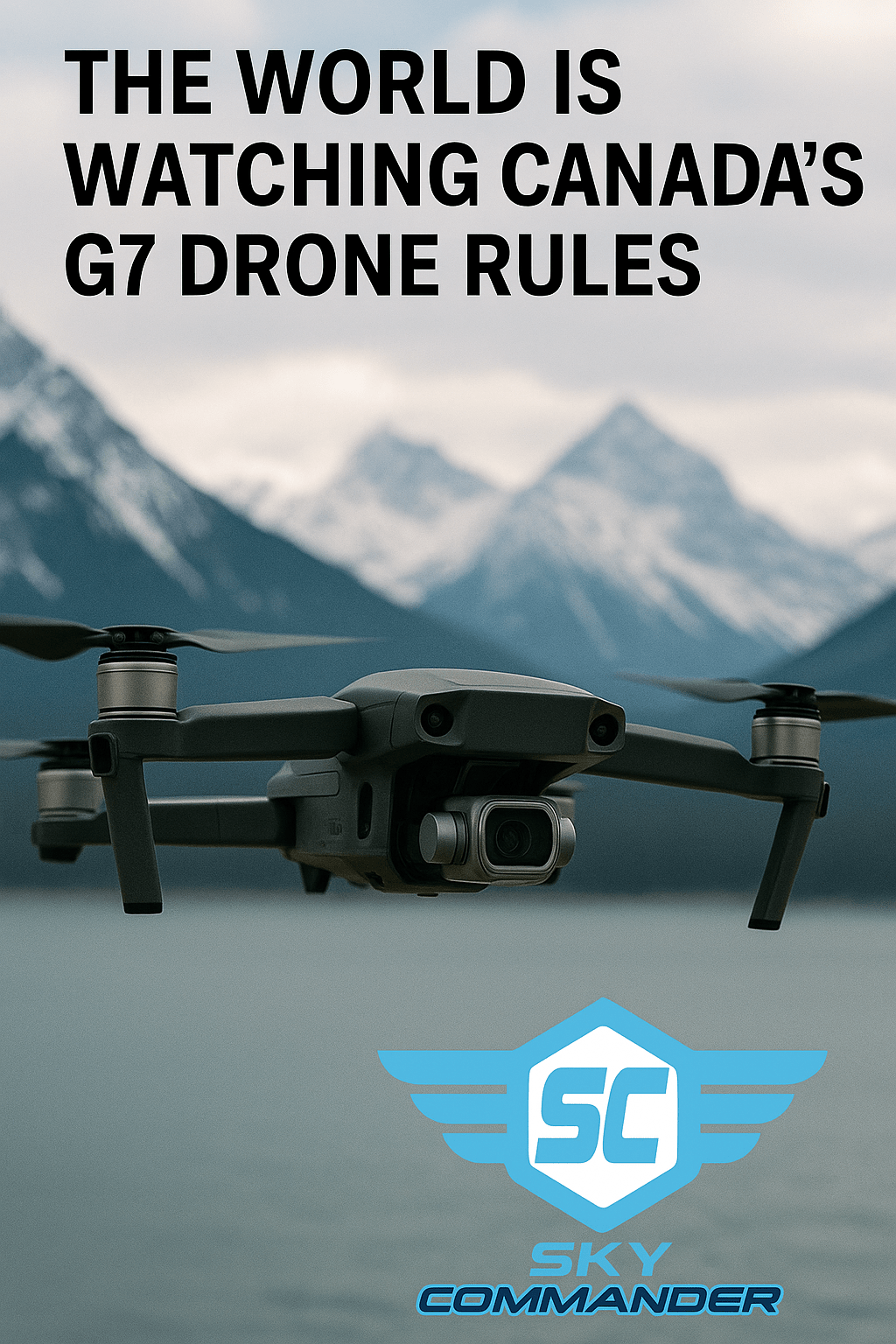
June 14–17, 2025 — Alberta’s skies aren’t just closed… they’re being watched by fighter jets, RCMP ground forces, and international security agencies.
A 56-kilometre drone no-fly zone has been activated over Kananaskis. A 37-kilometre ring encircles Calgary International Airport. This is not a drill.
And if you break the rules? You could face thousands in fines, jail time, or in rare but real cases — terrorism charges under Canada’s Criminal Code.
📍 What’s the G7 Drone No-Fly Zone?
To protect world leaders gathering for the G7 Summit in Kananaskis, Canadian authorities have enacted strict Temporary Flight Restrictions (TFRs) backed by military and RCMP enforcement.
Active Restrictions:
- 🔴 30 nautical miles (≈56 km) around Kananaskis Village
- 🟠 20 nautical miles (≈37 km) around Calgary International Airport
- 🛩️ Enforced with armed patrol aircraft, radar surveillance, and drone countermeasures
“No remotely piloted aircraft systems (RPAS) are allowed without specific authorization. Drones may be intercepted or neutralized if detected.” — Transport Canada
⚠️ What Happens If You Fly Anyway?
👨✈️ Best Case?
You’re hit with civil fines:
- $1,000 to $3,000 for individuals
- $5,000 to $15,000 for corporations
- Drone confiscation
- Flight logged in enforcement databases
🚨 Worst Case?
You face criminal prosecution or are investigated under anti-terrorism laws.
💣 Could Flying a Drone Be Considered a Terrorist Act?
Surprisingly: Yes.
Under Canada’s Criminal Code (Section 83), terrorism isn’t just about explosives — it includes:
- Acts intended to intimidate the public or government
- Interference with critical infrastructure or aviation
- Threats that cause fear or economic disruption
🧨 That means:
- Flying a drone into the G7 zone — even as a “prank” or protest — could be interpreted as a national security threat
- If your drone causes an emergency response or shuts down airspace: you’re potentially in terrorist hoax territory
- Penalties? Up to life imprisonment in the most serious cases
🎯 Intent matters: Accidental flights likely result in fines. But reckless or willful actions—especially near heads of state—could trigger terrorism investigations.
🛑 What’s Actually Happening in the Sky?
- 🛰️ Geofencing: Most drones (DJI, Autel) are blocked from flying in the zone—but not all
- 🛩️ Military Intercept Readiness: Reports confirm F-18 fighter patrols on standby in Alberta
- 📡 RF and GPS Monitoring: Law enforcement may be scanning for unauthorized uplinks
📉 How It Impacts Drone Operators & Businesses
- Flight bans = lost contracts for real estate, inspections, mapping
- Emergency jobs (e.g. wildfire survey, infrastructure checks) require special RCMP clearance — and may be denied
- Client frustration if jobs are delayed or cancelled
🔄 Smart operators are offering post-G7 discounts or shifting to unaffected regions temporarily.
🧭 What Should You Do?
✅ Stay Legal
- Use this official NOTAM viewer to plot safe fly zones
📄 Apply for Permission (If You Must Fly)
- Only via Special Flight Operations Certificate (SFOC)
- Requires at least 72 hours’ notice + approval
🧠 Communicate Clearly
- Alert clients early about shutdowns
- Emphasize public safety + regulatory compliance
- Offer delayed timelines + incentives where possible
🧨 What If You Fly Anyway?
Let’s be blunt:
| Violation | Penalty |
|---|---|
| Flying without license | Up to $1,000 fine |
| Entering restricted airspace | Up to $3,000 fine |
| Corporate violations | Up to $15,000 |
| Risking aircraft | Criminal charges |
| Causing disruption | Possible jail |
| Intentional threat or hoax | Up to life imprisonment under terrorism provisions |
🧠 Final Thought: This Is Bigger Than Just Canada
The G7 drone lockdown shows how airspace rules are tightening worldwide. With drones becoming more powerful, expect:
- More severe penalties
- Wider pre-emptive no-fly zones
- International cross-border enforcement agreements
The world is watching how Canada handles drone safety during the G7. Let’s show leadership — not make headlines for the wrong reasons.
📌 TL;DR
- June 14–17: No drones near Kananaskis (56 km) or Calgary (37 km).
- RCMP and military can jam, intercept, or shoot down unauthorized drones.
- Fines range from $1K to $15K — or worse, jail time or terrorism charges.
- Even hoaxes or reckless flights could land you with life behind bars.
- Stay smart. Stay safe. Stay grounded.


Leave a Reply